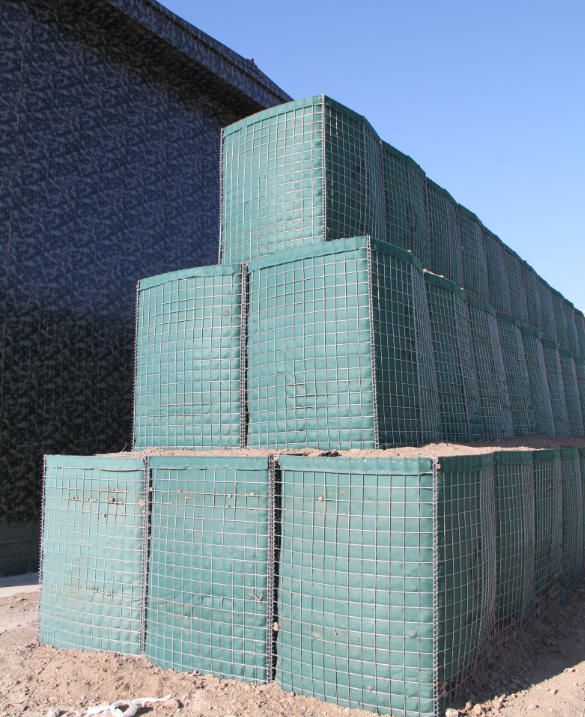
When the Site Expands, How Military Barriers Adapt to the New Perimeter
“Can we extend the protected area without rebuilding the existing perimeter?”
The site team had a clear reason for asking. New equipment was arriving, the storage area was expanding, and part of the working zone now needed controlled protection.
The team had two choices: replace the existing arrangement with a larger system or extend the protection from where it already ended.
For a changing site, the second option can be much more practical.
One Installation, Then Another
Initial requirement: protect the main operating area.
Site expansion: add protection around the new equipment zone.
Further change: rearrange sections if the operational layout moves again.
Military barriers can be arranged for these different requirements using modular sections.
Their metal mesh framework forms the structural body of the barrier, while the internal space is filled according to the project specification. The resulting structure can provide substantial temporary perimeter protection around facilities, storage areas, equipment, and other restricted zones.
A common mistake is to measure only what the site needs today.
If expansion is already expected, the initial project plan can consider future perimeter extensions. Barrier dimensions, configuration, filling material, total length, and delivery requirements should be confirmed before production.
That information gives the supplier a much clearer picture of the project.
For a contractor managing military perimeter protection, this can also simplify future purchasing. When another area needs protection, the new requirement can be compared with the existing configuration instead of starting the project from zero.